
UNDERSTANDING SKIN AGING
Laura Masini, JetPeel by TavTech Global Educator
ABSTRACT
Skin aging results from the combined effects of intrinsic biological decline and external environmental stressors. Intrinsic mechanisms—including genomic instability (progressive DNA damage), mitochondrial dysfunction (reduced cellular energy and increased oxidative stress), epigenetic drift (loss of regulatory precision in gene expression), telomere attrition (shortening of chromosome ends that limits cell replication), and cellular senescence (cells that permanently stop dividing)—gradually diminish epidermal renewal and extracellular matrix (ECM) integrity.
Extrinsic influences such as ultraviolet (UV) exposure, pollution, glycation (sugar binding to proteins and reducing their flexibility), and lifestyle behaviours further intensify oxidative stress, inflammation, and visible deterioration. This document gives an understanding of the changes that occur within the skin, enabling informed rejuvenation choices that respect and support its natural biological functions.
INTRODUCTION
Skin aging is a gradual, multilayered process influenced by genetics, cellular metabolism, and lifelong exposure to environmental factors. Together, these mechanisms lead to structural weakening, diminished elasticity, and slower tissue renewal. Understanding how aging affects the epidermis and dermis helps clinicians select treatments that respect skin physiology while targeting early signs of decline.
INTRINSIC BIOLOGICAL MECHANISMS
Intrinsic aging arises from age-dependent molecular decline. Genomic instability (accumulation of DNA damage) reduces cell replication, while mitochondrial dysfunction (decline in ATP energy production and higher ROS—reactive oxygen species, unstable molecules that increase with aging and damage cells) further reduce the skin’s ability to function and repair.
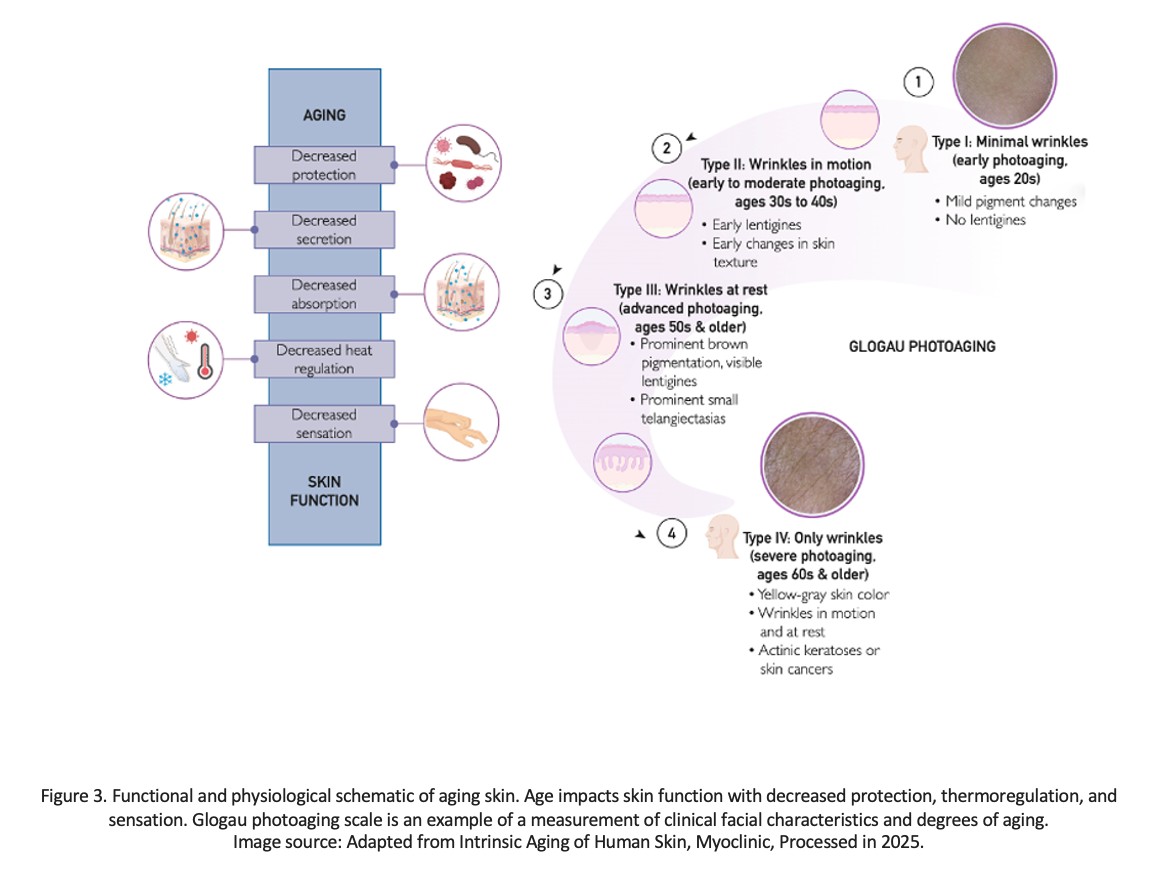
Epigenetic drift (altered DNA methylation and chromatin organization) deregulates gene expression, while telomere attrition (shortening of chromosomal ends) leads to irreversible cell arrest and the release of SASP factors (senescence-associated secretory phenotype), driving chronic inflammation. These processes impair fibroblast function and reduce the production of collagen, elastin, and GAGs (glycosaminoglycans—hydrating molecules such as hyaluronic acid). Collectively, these intrinsic mechanisms lead to visible changes such as fine lines, loss of firmness, reduced elasticity, thinning skin, dryness, dullness, and slower healing—reflecting the progressive decline of the skin’s structural and functional capacity.
EXTRINSIC AGING
Extrinsic aging results from environmental and lifestyle exposures that accelerate molecular stress in the skin. Ultraviolet (UV) radiation generates ROS (reactive oxygen species—unstable molecules that damage cells), induce DNA mutations, and activate matrix-degrading enzymes that break down collagen. Pollution further increases oxidative stress (an overload of harmful reactive molecules that weaken cells) by disrupting the skin’s lipids and amplifying inflammation.
Glycation—caused by excess circulating glucose—binds to collagen and elastin, making them rigid and decreasing tissue elasticity. Lifestyle habits such as smoking, chronic stress, poor sleep, and an unbalanced diet intensify these processes. Collectively, these factors contribute to wrinkles, uneven pigmentation, dehydration, loss laxity, reduced radiance, enlarged pores, heightened sensitivity, and a rougher overall texture.
ISTOLOGICAL AND STRUCTURAL CHANGES
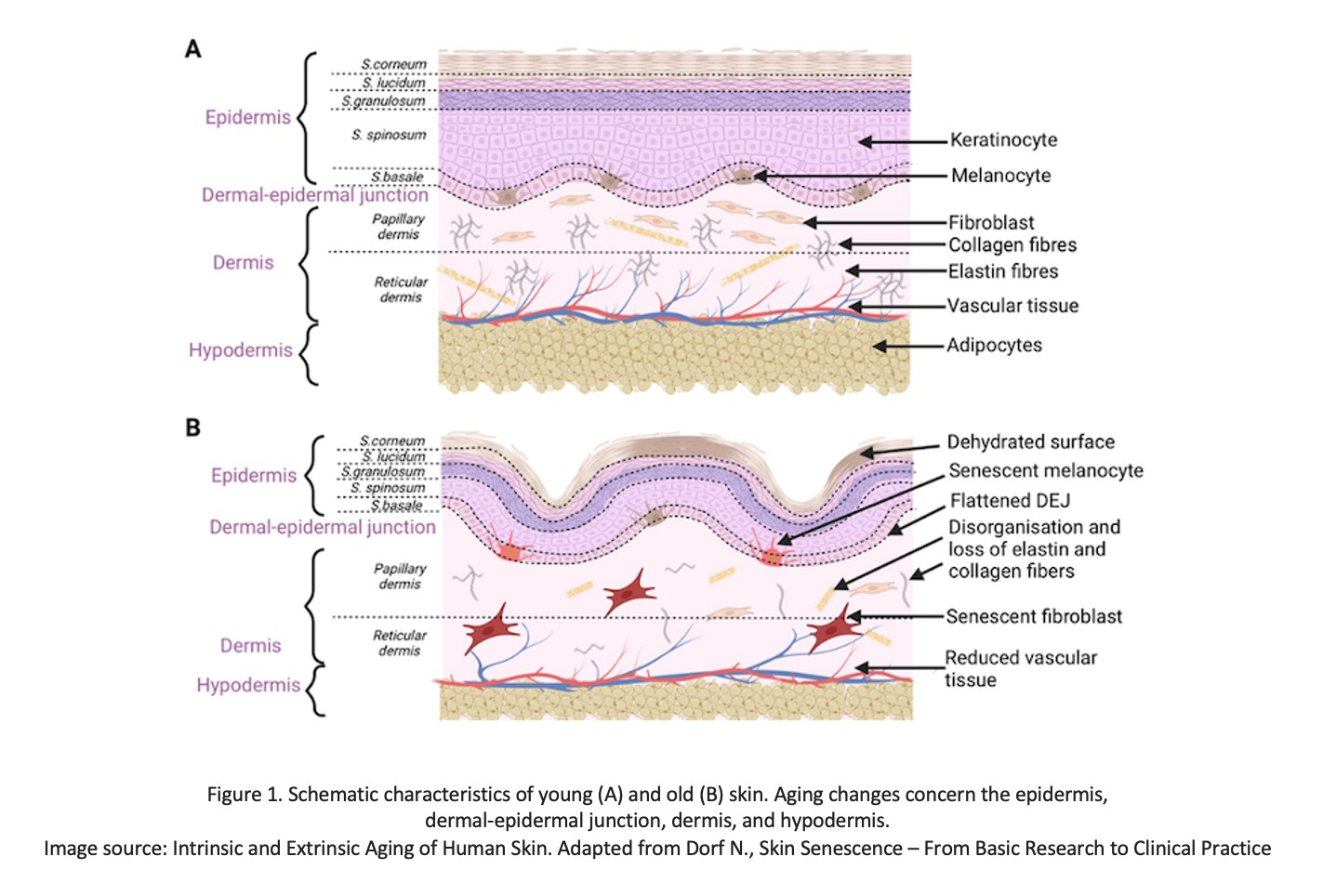
Aging skin exhibits epidermal thinning (slower keratinocyte turnover), DEJ flattening (weakened dermal–epidermal junction), collagen fragmentation (loss of supportive fibers), elastin degeneration (reduced recoil capacity), GAG depletion (decline in glycosaminoglycans—key water-binding molecules such as hyaluronic acid), and microvascular decline (reduced blood flow).
In the hypodermis, aging also leads to decreased adipocyte volume and structural redistribution of subcutaneous fat, contributing to reduced support and increased skin laxity. These changes collectively impair elasticity, hydration, firmness, and barrier resilience.

RATIONAL FOR NON-INVASIVE APPROCHES
Non-invasive aesthetic modalities are preferred over invasive procedures in antiaging strategies because they avoid the immunological burden, tissue disruption, and inflammatory cascade typically triggered when the skin barrier is breached. In mature or compromised skin, where repair capacity is reduced and inflammatory thresholds are lower, minimizing antigen exposure and preventing additional structural injury is essential for maintaining tissue integrity and avoid further damage.
JETPEEL AS A NON-INVASIVE METHOD FOR MANAGING AGING SKIN
JetPeel supports skin affected by the full spectrum of aging processes by enhancing epidermal renewal, reinforcing barrier integrity, and optimizing overall skin function—without provoking the immunological burden, tissue disruption, or inflammatory cascade often associated with invasive or ablative modalities. Its high-velocity micro-droplet jet stream delivers a contactless lymphatic massage that improves lymphatic flow and microcirculation, both essential for aging skin where metabolic exchange, oxygenation, and waste clearance naturally decline, while simultaneously providing gentle, non-ablative exfoliation that removes excess corneocytes yet preserves keratinocyte integrity. In parallel, JetPeel enables needle-free infusion of hydrating and bioactive compounds such as hyaluronic acid, peptides, growth factors, and antioxidants, reducing TEWL and reinforcing a more resilient barrier that is less prone to irritation and cytokine activation (release of inflammation-signalling molecules). Enhanced microcirculation further elevates nutrient and oxygen delivery to skin cells. By supporting physiological skin function without inducing trauma, JetPeel addresses the key structural and functional changes associated with aging and provides effective rejuvenation through a fully non-invasive mechanism.
CONCLUSION
Skin aging represents the cumulative outcome of intrinsic biological decline and external environmental exposure, leading to progressive alterations in epidermal turnover, dermal structure, vascular support, and barrier function. These changes underline the importance of treatment strategies that preserve tissue integrity, limit inflammatory activation, and support physiological skin processes rather than inducing additional trauma. Non-invasive approaches that enhance microcirculation, hydration, and epidermal renewal while respecting the skin barrier are therefore particularly appropriate in the management of aging and compromised skin. Within this framework, JetPeel is positioned as a fully non-invasive modality whose mechanism of action aligns with physiological skin function, supporting tissue homeostasis while avoiding barrier disruption and inflammatory activation.
