

SENSITIVE SKIN
Laura Masini, JetPeel by TavTech Global Educator
ABSTRACT
Sensitive skin is a skin type, usually genetic and permanent, often associated with chronic conditions such as couperose and rosacea. Sensitive skin appears thin and fragile, and is prone to redness, stinging, and discomfort. It is characterized by structural and functional features that result in increased skin reactivity and a reduced tolerance to stimuli that are normally well tolerated by other skin types.
From a functional and biological perspective, sensitive skin is frequently associated with epidermal barrier impairment and persistent low-grade inflammation. Progressive functional deterioration may occur when sensitivity is inadequately managed over time, particularly in relation to cumulative inflammatory burden and premature functional skin aging.
INTRODUCTION
Sensitive skin requires a cautious approach. Treatments that are aggressive or inadequately adapted may exacerbate inflammation, compromise the skin barrier, and accelerate degenerative changes over time. Understanding sensitive skin is therefore essential not only for symptom management, but also for preserving skin health and resilience over time.
FACTORS MODULATING SENSITIVE SKIN EXPRESSION
Sensitive skin is characterized by a reduced tolerance threshold and heightened reactivity. Its clinical expression may be exacerbated or amplified by a combination of exogenous and endogenous factors. Common external modulators include environmental conditions such as temperature fluctuations, ultraviolet radiation, pollution, and exposure to irritating or inappropriate cosmetic products.
Endogenous factors, including genetic predisposition, hormonal fluctuations, and age-related changes, may further increase skin susceptibility and symptom intensity. These factors do not represent the primary cause of sensitive skin, but rather act as triggers that intensify barrier dysfunction, neurovascular reactivity, and inflammatory responses in predisposed skin.
STRUCTURAL ALTERATIONS IN THE SKIN LAYERS
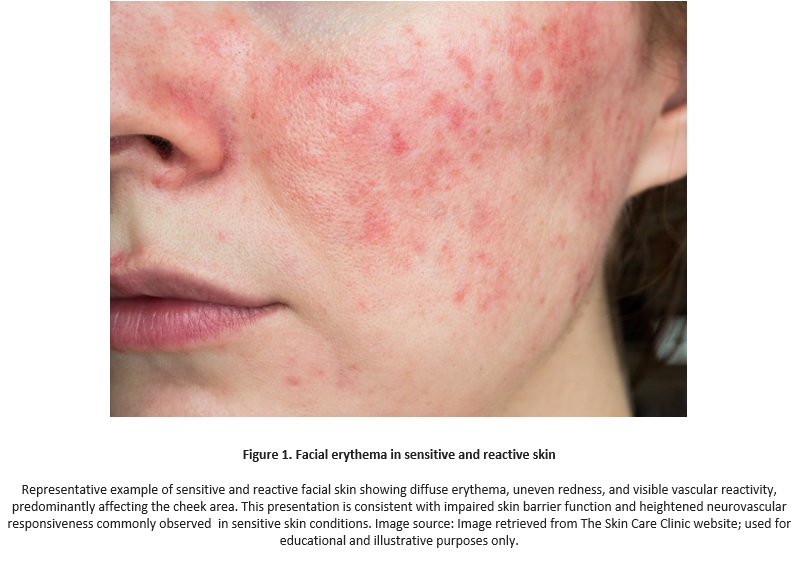
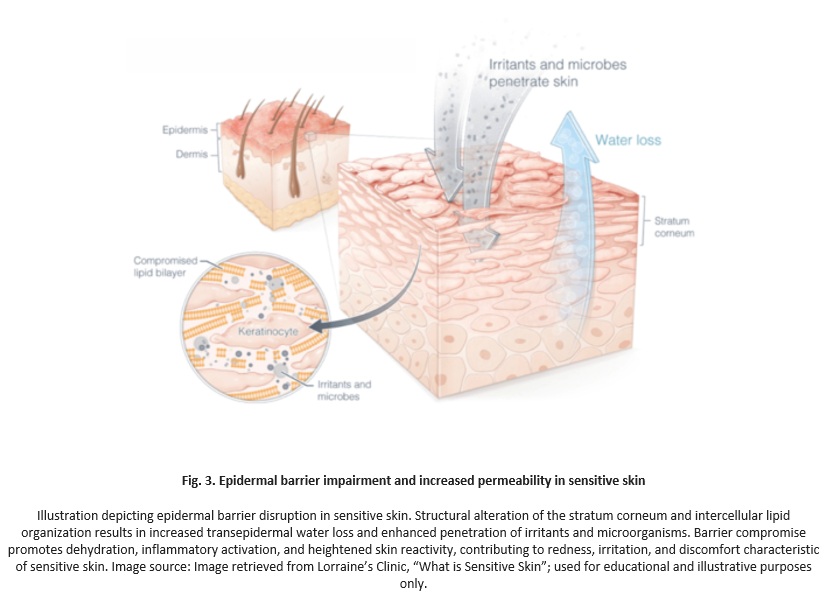
In sensitive skin, structural imbalance is primarily driven by barrier impairment and reduced epidermal lipid synthesis. The stratum corneum may become less cohesive due to a depletion of ceramides and sphingolipids (structural lipids of the epidermis barrier). This lipid deficiency results in increased transepidermal water loss (TEWL), leading to dehydration and heightened permeability to irritants. At the same time, superficial dermal vessels, characterized by increased reactivity and functional visibility, intensify visible erythema.
When the barrier is not restored, dysfunction may become chronic. Repeated irritant penetration sustains low-grade inflammation, while age-related declines in lipid production and epidermal renewal further weaken structural resilience. Over time, persistent redness may also contribute to collagen degradation, impaired dermal support, and accelerated skin aging, resulting in reduced tolerance and long-term structural fragility.
NEURO-SENSORY HYPERSENSITIVITY
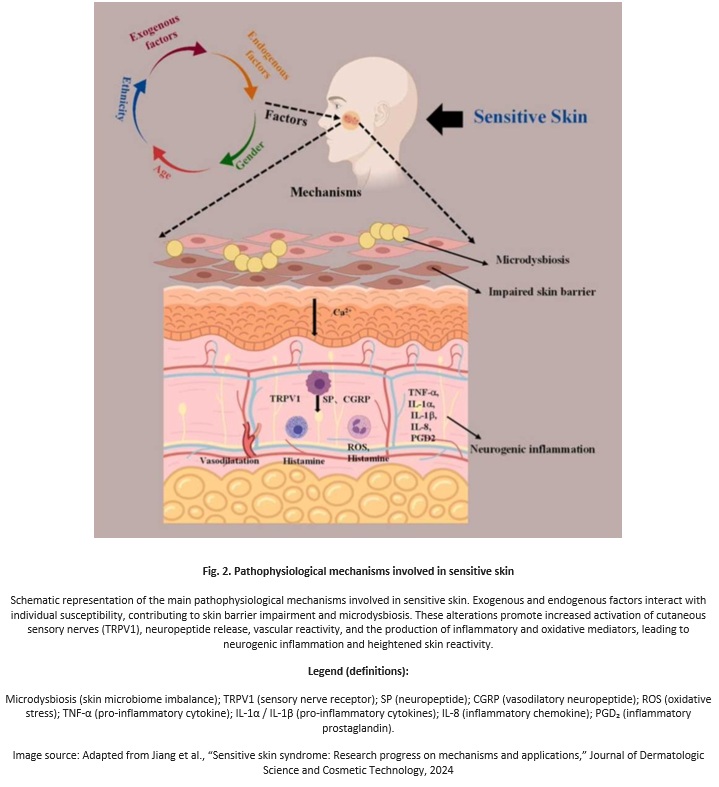
Neuro-sensory hypersensitivity is characterized by functional hyperreactivity of cutaneous nerve endings, rather than structural nerve damage. In sensitive skin, sensory fibers overrespond to normally innocuous stimuli such as thermal variations, mechanical contact, and topical agents, resulting in burning, stinging, and discomfort.
This hyperreactivity is associated with increased activity of TRPV1 (key nerve receptor for heat, pain, and irritation), which lowers the sensory activation threshold and amplifies nerve signalling. Persistent neural activation sustains neurogenic inflammation, promoting prolonged vasodilation and visible erythema. If inadequately managed, this process may progressively worsen over time, as cumulative inflammatory stress and reduced barrier repair capacity further increase nerve sensitivity and skin fragility. Over time, chronic nerve overstimulation can impair barrier function, increase transepidermal water loss, destabilize the microvasculature, and reduce skin tolerance.
PHYSIOLOGICAL DYSREGULATION IN SENSITIVE SKIN
Sensitive skin is characterized by a weakened barrier with increased transepidermal water loss, altered pH, reduced hydration, and heightened neuro-sensory reactivity, creating a self-perpetuating state of chronic low-grade inflammation in which pH imbalance may also disrupt the skin biome, further amplifying inflammation, reactivity, and barrier instability.
If not properly managed, this condition may lead to persistent skin sensitivity, vascular instability, reduced treatment tolerance and predictability, and inflammation-driven skin aging, most commonly affecting the face, especially the cheeks, perioral area, eyelids, and neck.
SAFE, NON-INVASIVE MANAGEMENT OF SENSITIVE SKIN
In managing sensitive skin, therapeutic effectiveness depends on strategies specifically developed for low-tolerance skin. Consequently, any intervention must remain strictly within physiological limits, prioritizing preservation of epidermal integrity and the long-term maintenance of cutaneous homeostasis.
JetPeel by TavTech, used in combination with JetCare Ayurveda formulations—clinically proven for sensitive skin—constitutes a multidimensional, non-invasive approach aligned with these requirements. The JetCare Ayurveda formulations are specifically developed for sensitive skin and support all treatment stages, including lymphatic stimulation, gentle exfoliation, and trans-epidermal infusion. Lymphatic stimulation contributes to microcirculatory balance and reduction of inflammatory congestion, supporting early improvement in skin comfort and visible redness.
Gentle exfoliation with JetCare Ayurveda Exfoliation promotes controlled epidermal turnover without irritation, discomfort, or barrier disruption. Subsequent infusion and booster infusion stages deliver targeted JetCare Ayurveda ingredients that reinforce barrier function while supporting regenerative and rejuvenating processes under conditions compatible with sensitive skin physiology.
Overall, this integrated, tolerance-driven approach represents a physiologically coherent strategy for the safe, effective, and reproducible management of sensitive skin, addressing both functional instability and long-term preservation of skin quality.
CONCLUSION
Sensitive skin reflects a multifactorial dysfunction involving barrier impairment, neuro-sensory hyperreactivity, and vascular instability, resulting in heightened reactivity and persistent redness. Without appropriate management, these alterations may progressively compromise skin tolerance and functional resilience.
JetPeel by TavTech enables intervention on sensitive skin without epidermal disruption, allowing physiological stimulation while preserving barrier integrity. When used in conjunction with suitable JetCare Ayurveda serum formulations — specifically developed and clinically proven for sensitive skin — this approach supports hydration balance, reduction of inflammatory load, and improvement of skin comfort.
The integration of targeted JetCare Ayurveda serums contributes not only to stabilization of sensitive skin parameters, but also to the maintenance of skin quality through support of physiological regenerative processes. Precision, high tolerability, and the absence of mechanical or chemical aggression allow repeatable treatments and predictable outcomes over time, consistent with the long-term management needs of sensitive skin.
