
Lymphatic Function and Its Impact on Skin Aging
Laura Masini, JetPeel by TavTech Global Educator
ABSTRACT
The lymphatic system is a key regulator of skin integrity, longevity, and resilience. In coordination with the microcirculation, it maintains interstitial fluid balance (regulation of fluid movement between tissues to prevent accumulation), supports immune surveillance (continuous monitoring and removal of pathogens and damaged cells), facilitates the clearance of metabolic by-products (waste substances produced during normal cellular activity), and preserves extracellular matrix (ECM) homeostasis (maintenance of collagen, elastin, and structural support of the skin). With aging, lymphatic endothelial senescence (age-related functional decline of lymphatic endothelial cells) and reduced lymphatic vessel efficiency impair these processes, contributing to chronic inflammation and structural skin weakening. This article provides an overview of lymphatic physiology and its relevance in supporting healthier skin dynamics and visible aging outcomes.
INTRODUCTION
With advancing age, lymphatic circulation slows, altering tissue fluid balance and inflammatory clearance within the skin. Reduced lymph transport efficiency and increased vessel permeability lead to interstitial fluid accumulation, impaired waste removal, and prolonged retention of inflammatory mediators, promoting tissue congestion, edema, dullness, and increased oxidative stress (an imbalance between free radical production and the skin’s antioxidant defense) and metabolic stress (cellular stress caused by inefficient energy production and waste accumulation), thereby accelerating structural skin aging. At the same time, age-related microvascular decline reduces capillary density and impairs perfusion, limiting oxygen and nutrient delivery.
Together, lymphatic and microvascular dysfunction disrupt tissue homeostasis (the ability of the skin to maintain a stable internal environment), promote extracellular matrix degradation, weaken dermal support, and increase susceptibility to chronic inflammation. Clinically, these processes manifest as loss of firmness, reduced elasticity, uneven texture, and diminished skin resilience.
CUTANEOUS LYMPHATIC ANATOMY AND ORGANIZATION
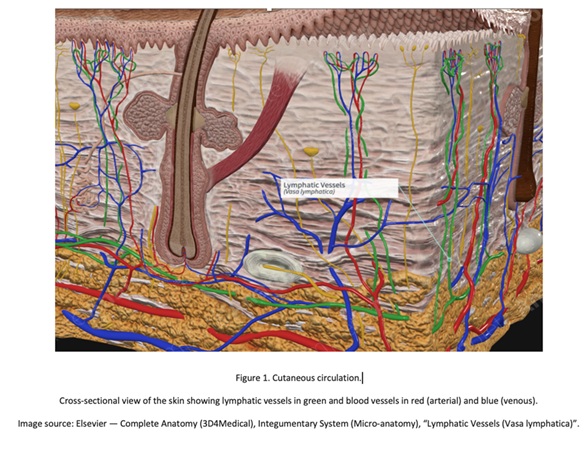
The lymphatic system is a distinct vascular network that operates alongside, but independently from, blood circulation. Unlike the cardiovascular system, it lacks a central pump. Lymphatic transport begins within tissues through initial lymphatic capillaries, which collect interstitial fluid composed of water, proteins, lipids, immune cells, and metabolic waste released from blood capillaries.
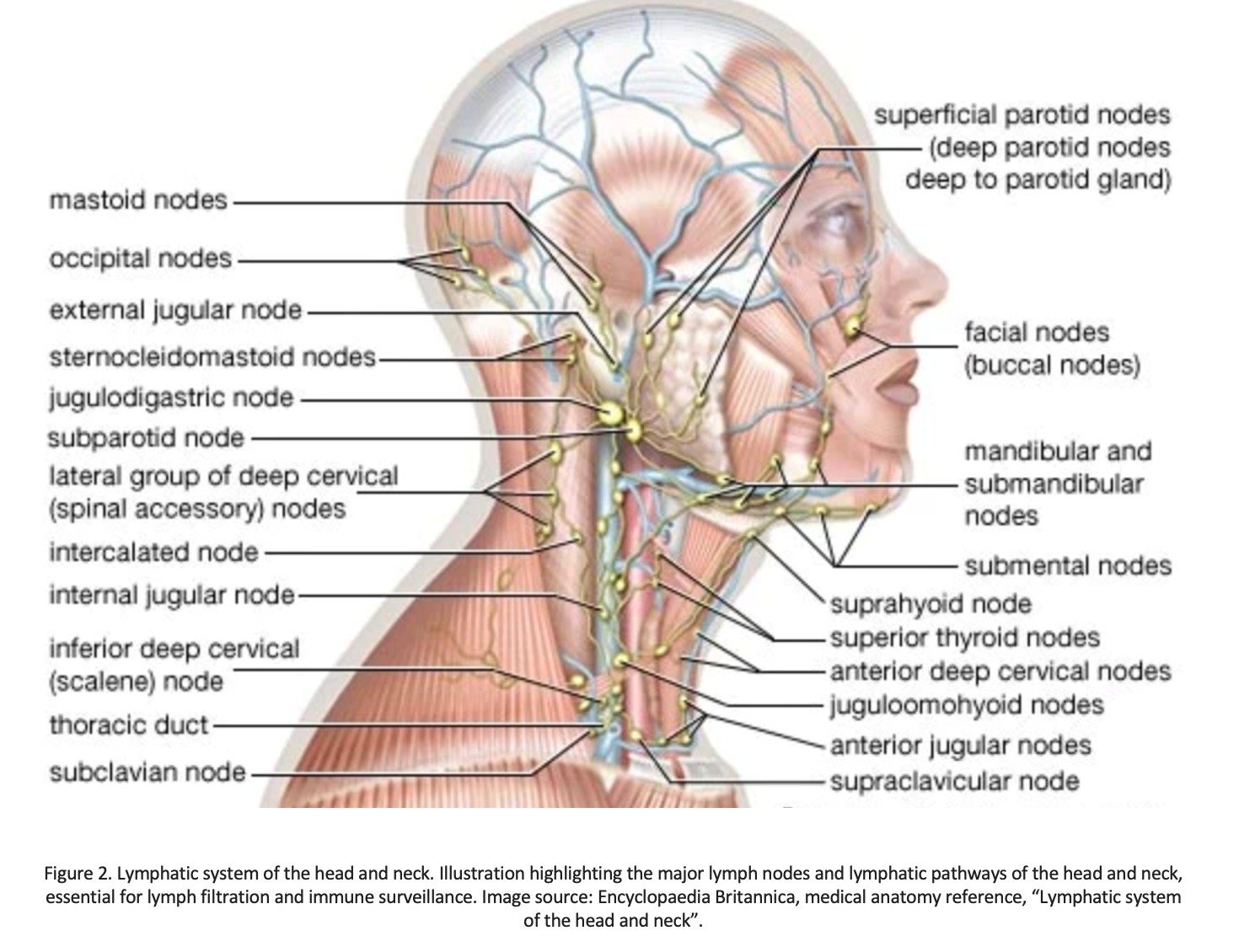
Once collected, this fluid becomes lymph and moves slowly through a network of lymphatic vessels. Its propulsion relies on one-way valves and lymphangions—small contractile segments of the vessel wall that generate rhythmic contractions to advance lymph flow. The lymph is filtered through lymph nodes before being returned to the bloodstream. In the skin, lymphatic vessels are primarily located in the dermis and upper subcutis, forming an organized drainage network. Through continuous fluid clearance and immune support, the cutaneous lymphatic system plays a critical role in maintaining tissue balance, preventing congestion, and preserving skin health and resilience.
CUTANEOUS LYMPHATIC PHYSIOLOGY AND ROLE IN SKIN AGING
The cutaneous lymphatic system is essential for tissue homeostasis. By regulating interstitial fluid balance, removing metabolic waste, and clearing inflammatory mediators, it preserves the biochemical and structural environment required for healthy skin function. With aging, lymphatic vessels and their valves gradually lose efficiency, resulting in slower lymph flow.
When lymphatic clearance declines, fluid and waste accumulate within the skin, disrupting normal interstitial exchange. This altered environment negatively affects extracellular matrix integrity, progressively weakening collagen and elastin fibers and reducing structural support. In parallel, age-related changes in blood circulation further compromise oxygen and nutrient delivery to skin cells. When both circulatory systems slow down, fluid stagnation increases, inflammation persists, and cellular metabolism becomes less efficient. Over time, these combined effects lead to visible signs of aging such as reduced firmness, fine lines, uneven texture, swelling, loss of facial definition, and a fatigued appearance.
OPTIMIZING LYMPHATIC FUNCTION IN SKIN AGING
Lymphatic efficiency plays a central role in regulating skin aging, therefore, supporting this system is essential for maintaining a balanced and functional cutaneous environment. As lymphatic transport naturally declines with age, the skin becomes more susceptible to fluid retention, reduced oxygen and nutrient exchange, persistent low-grade inflammation, and gradual structural weakening—all mechanisms that visibly accelerate aging.
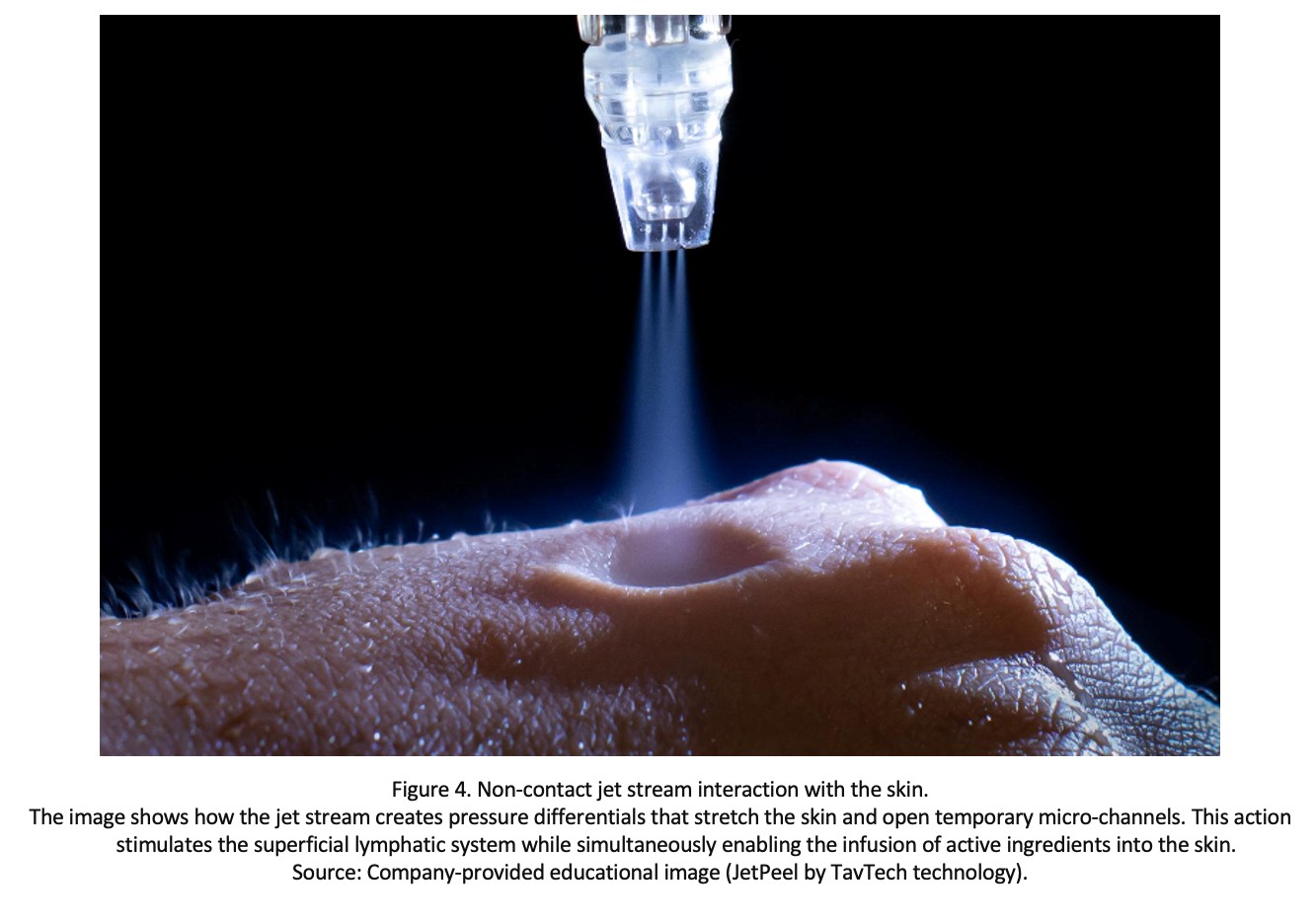
Within this physiological context, JetPeel provides non-contact stimulation of both the lymphatic system and the microcirculation. This stimulation supports interstitial fluid movement and enhances waste clearance while avoiding mechanical stress on the skin surface. In parallel with this lymphatic activation, its trans-epidermal delivery enables the infusion of functional ingredients. By improving fluid clearance, supporting oxygen and nutrient diffusion, and reducing inflammatory load, this combined approach helps re-establish a more stable cutaneous microenvironment. The non-contact nature of the treatment allows effective work on congested, sensitized, or inflamed skin, enhancing tissue responsiveness while respecting skin integrity.

CONCLUSION
Supporting lymphatic function and microcirculatory efficiency is essential for preserving skin vitality and moderating the biological mechanisms that drive visible aging.
By combining no-contact microcirculatory stimulation with targeted trans-epidermal delivery, this approach helps restore a more balanced cutaneous environment, improves tissue responsiveness, and reinforces the conditions necessary for healthier long-term skin behaviour. It offers a physiologically aligned method for enhancing treatment outcomes while addressing foundational processes central to skin aging.